
Lagree vs Reformer Pilates: Which Is Actually Better?
Is Lagree better than reformer Pilates? It's one of the most common questions people ask before committing to either method, and it's worth asking seriously. Both machines look like some kind of spring-loaded sled. Both promise low-impact workouts. Both have devoted followings that swear the method changed their body. The answer depends entirely on what you're trying to accomplish, because the differences between a Lagree Megaformer class and a reformer Pilates session are bigger than the machines suggest.
Yes, both methods use spring-based resistance. Yes, both are gentler on your joints than running or CrossFit. But beyond that common ground, the intensity, the results, and the ideal candidate for each method diverge significantly. This article breaks down four things: how the machines actually work, what each method does to your body, which is smarter for injury recovery, and what you'll pay. If you're in East Vancouver and curious about the Megaformer side of this comparison, Evolution Fitness & Lagree offers coached, small-group Lagree classes designed to make your first session feel manageable, not overwhelming.
The Machines Look Similar But Work Very Differently
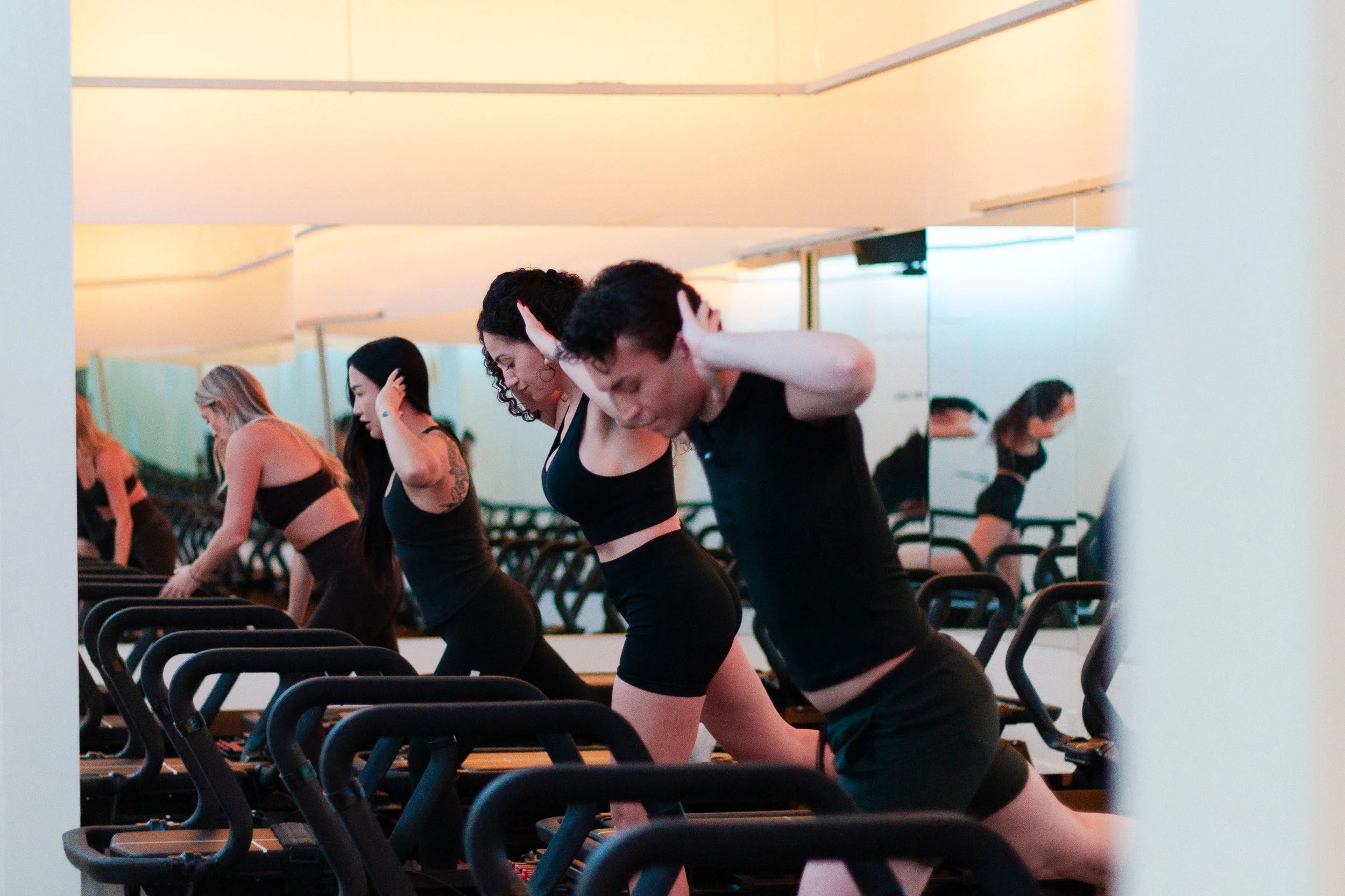
The visual similarity between the Megaformer and the traditional Pilates Reformer is real but misleading. Both use a sliding carriage and spring resistance, but that's roughly where the overlap ends. Understanding the hardware difference matters because everything else, intensity, muscle targets, and outcomes, flows directly from it.
What the Megaformer Actually Does
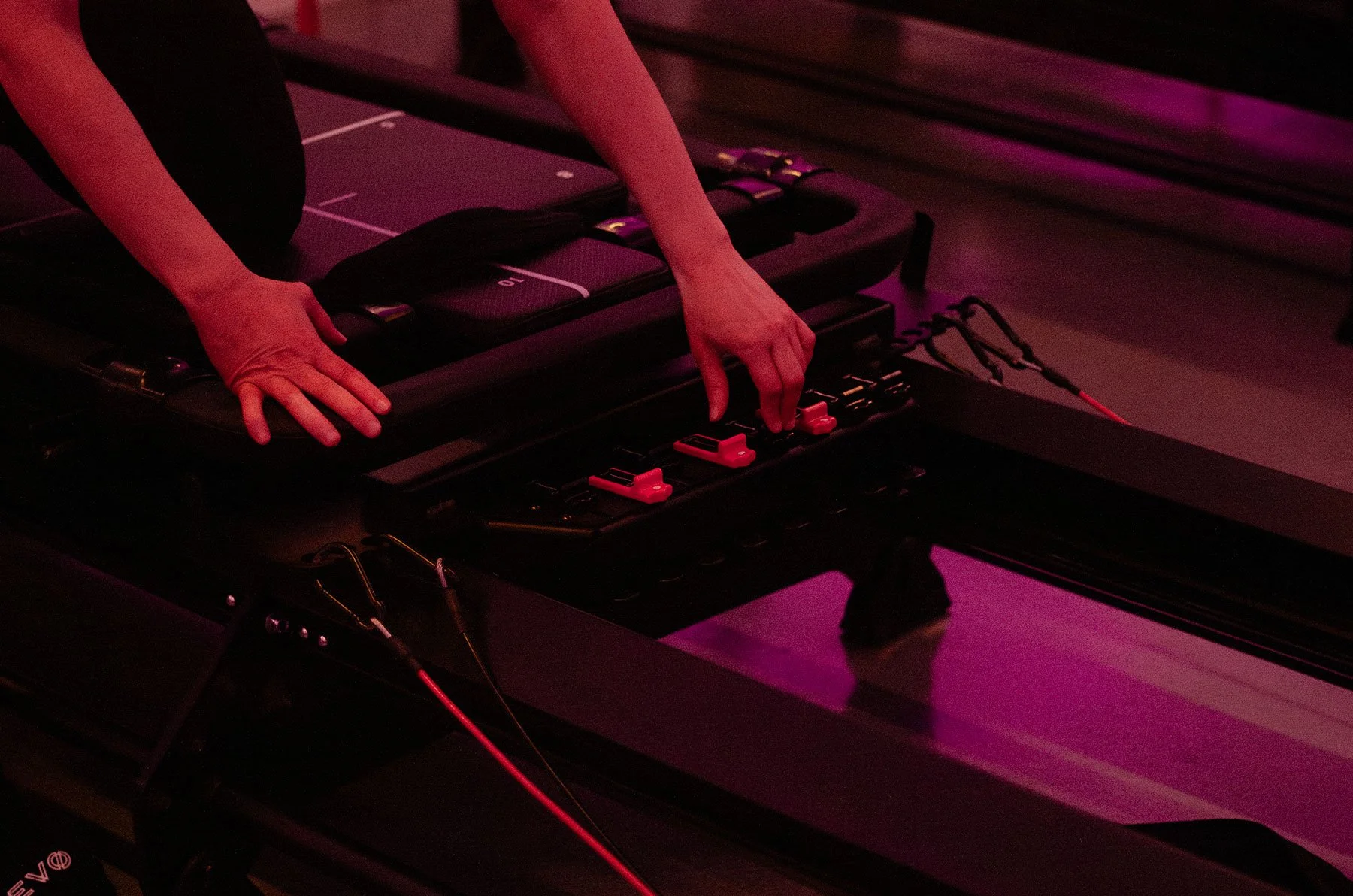
The Megaformer is a significantly larger machine than the Reformer, running 115 to 130 inches long compared to the Reformer's 86 inches. It features dual platforms, multiple cable stations and handles, and a heavier multi-spring system designed to keep your muscles under constant, uninterrupted tension. Unlike the Reformer, it was purpose-built for compound, full-body movement sequences, and an incline feature adds cardiovascular demand on top of the muscular load. Because the carriage is nearly always in motion and the spring load stays engaged throughout, there are very few positions on this machine that allow your muscles to fully rest between reps. For a focused equipment-side comparison, see the Megaformer vs the Traditional Reformer guide.
How the Traditional Reformer Is Built for Precision
The traditional Pilates Reformer uses a single sliding carriage, adjustable springs, and a set of ropes and straps designed for controlled, methodical movement patterns. Crucially, the springs can be set to assist rather than resist movement, a core reason physical therapists rely on it in rehabilitation settings. It prioritizes postural correction, spinal alignment, and neuromuscular coordination rather than metabolic intensity. The machine actively supports controlled movement in ways the Megaformer simply does not.
Is Lagree Better Than Reformer Pilates for Intensity? Two Very Different Experiences
Reading a description of both formats, they both sound like a solid workout. Taking both in the same week makes the difference obvious fast. The class structures are built around completely different goals, and the physical experience reflects that.
What a Lagree Class Actually Feels Like
A Lagree class runs 45 minutes with virtually no rest between exercises. Movements are performed at a slow, deliberate tempo, typically four counts in each direction, with each exercise running 60 to 120 seconds of continuous tension. The result is muscle shaking and an elevated heart rate. Caloric burn is generally estimated at roughly 400 to 600 calories per session, based on studio heart-rate data rather than peer-reviewed trials, so individual results will vary (see Lagree caloric burn estimates). Quick transitions from one exercise to the next keep the intensity high from start to finish. Many people who walk into a Lagree class expecting something like a gentle Pilates session report being genuinely surprised by how hard they worked.
The Pace and Rhythm of a Reformer Pilates Session
Reformer Pilates classes run 50 to 60 minutes and move at a deliberate, controlled pace with planned pauses between exercises for form corrections and breath work. Caloric burn is generally estimated in the 250 to 450 range per session, again, studio and fitness-source figures rather than peer-reviewed measurements. The measured tempo is a feature of the method, not a flaw. It allows instructors to cue spinal alignment and body awareness in real time, which is exactly what the method requires. The cardiovascular demand is meaningfully lower, and that's by design.
What Each Method Actually Builds in Your Body
Format differences matter, but what people really want to know is what changes in their body. The physiological outcomes of these two methods are distinct enough that choosing the wrong one for your goal wastes both your time and your money.
Lagree's Full-Body, Time-Under-Tension Approach
Lagree uses compound sequences that recruit large and small muscle groups simultaneously. The emphasis on sustained isometric holds and slow-tempo pulses drives slow-twitch fiber fatigue, producing the characteristic muscle shaking most members notice in their first few sessions. The dual-platform design keeps core stability constantly challenged, and standing-heavy exercises build functional movement patterns on top of the muscular work. Done consistently at two to four sessions per week, visible muscle tone and improved body composition are commonly reported around the eight to twelve week mark, a timeline drawn from aggregated studio experience and time-under-tension research rather than randomized controlled trials comparing Lagree directly to reformer Pilates.
Reformer Pilates and the Precision Advantage
Reformer Pilates targets deep core stabilizers and postural muscles through isolated, controlled movements. Exercises are mostly performed lying down or seated, positions that let the instructor focus on exactly how your spine and shoulders are moving, with strong attention to alignment and neuromuscular control. The method builds meaningful flexibility gains and improves daily movement efficiency in ways Lagree does not specifically target. Reformer Pilates is less about inducing fatigue and more about rewiring how your body moves. For people managing postural imbalances, compensatory movement habits, or a history of chronic pain, that distinction is significant.
Injury Risk and Which Method Is Safer for Rehab
This section matters most to anyone managing a past injury or dealing with joint sensitivity. Making the wrong choice here doesn't just mean a suboptimal workout, it can mean genuine setbacks.
When Lagree's Intensity Becomes a Liability
Lagree is not a rehabilitation tool. The constant tension and muscle-to-fatigue approach can strain compromised structures, particularly the lower back and shoulders, when form breaks down under load. For anyone in early or mid-stage recovery from a herniated disc, shoulder labrum tear, or ACL repair, the intensity creates a real re-injury risk. Lagree is built for fit people who want to push harder, not people who need guided structural repair. Even for healthy participants, form quality matters enormously, which is one reason small-group settings with attentive coaches, like the classes at Evolution Fitness & Lagree, make a meaningful difference compared to larger, less supervised formats.
Why Reformer Pilates Leads in Rehabilitation Settings
Reformer Pilates is widely recommended by physical therapists for specific, well-documented reasons. The spring-assisted support system can be configured to reduce resistance rather than increase it, enabling safe movement rehearsal for injured joints. Controlled range of motion and supine positioning make it ideal for deep core activation, shoulder stabilization, and pelvic-lumbar control without loading compromised structures. Pilates-based exercise is supported by clinical evidence as an effective approach for chronic lower back pain, including findings published in the Journal of Bodywork and Movement Therapies, and is considered established practice in many physical therapy and rehabilitation settings. For lower back issues, shoulder instability, hip labrum problems, and post-surgical recovery, reformer Pilates is the safer and more corrective choice.
Cost and What to Expect When You Walk In
Practical logistics matter. Both the price point and the experience of walking into each type of studio differ enough to factor into your decision.
Lagree Class Pricing and Studio Format
In major markets, Lagree studios typically price single sessions between $30 and $40, with class packs bringing the per-class rate down to roughly $25 to $35. The Megaformer itself costs $10,000 to $15,000 per unit, which is why Lagree is almost always a boutique, small-group experience rather than a large-format offering.
Class sizes are intentionally limited to around 10 participants, which means more instructor attention per person but also real demand for advance booking. Most studios strongly recommend reserving your spot ahead of time given the limited capacity.
Reformer Pilates Pricing and Accessibility
Reformer studios generally price single sessions at $20 to $35, with packs averaging $18 to $30 per class. Because the Reformer is not a proprietary machine, more studios offer it and more price variation exists across markets. Formats range from private one-on-one sessions at premium price points to semi-private and larger group classes. For anyone making the switch from reformer Pilates to Lagree, Evolution Fitness & Lagree eases that transition with a dedicated Starting Guide for new members and small-group coaching that removes the guesswork from your first few sessions on the Megaformer.
Which One Is Right for You?
Both methods have genuine merit. The question is which one serves your actual goals, and there's usually a clear answer once you're honest about what those goals are.
Choose Lagree If Your Goal Is Body Composition and Intensity
If you want to change how your body looks, build muscular endurance, and get a real cardiovascular challenge in under an hour, Lagree is the stronger choice. It's particularly well-suited for people who find reformer Pilates too slow, gym workouts repetitive, or traditional HIIT too hard on their joints. The low-impact nature makes it sustainable over time; the intensity makes it effective. Based on studio experience and time-under-tension principles, most members start noticing visible results around the eight to twelve week mark when training two to four times per week.
Choose Reformer Pilates If You're Managing Injury or Building a Foundation
If you're recovering from an injury, returning to exercise after a long break, or focused on posture, flexibility, and movement quality, reformer Pilates is the smarter starting point. The structural support, spring-assisted range of motion, and instructor-led precision give your body the environment to rebuild correctly before adding metabolic intensity. Jumping straight into Lagree with a compromised structure is a shortcut that often leads backward.
Can You Do Both?
Yes, and many members do exactly that. Reformer Pilates works well as active recovery on non-Lagree days, reinforcing the movement quality and joint stability that makes Lagree more effective over time. If you're a consistent reformer Pilates practitioner looking for more intensity, a Megaformer class is a logical next step. The spring-based resistance will feel familiar. The workout won't. If you'd like a straightforward side-by-side write-up before you commit, check this Lagree vs. Reformer comparison.
The Bottom Line: Is Lagree Better Than Reformer Pilates?
So, is Lagree better than reformer Pilates? It depends on what you're training for. Lagree is a high-intensity, body-composition tool built around time under tension and continuous circuit training. Reformer Pilates is a precision-focused, rehabilitation-friendly method built around controlled movement and postural correction. Neither is objectively superior, they serve different goals, and the right answer depends on where you are right now and what you're working toward.
If the Lagree side of this comparison sounds like your kind of challenge, Evolution Fitness & Lagree is a great place to find out. The studio offers a dedicated Starting Guide for first-timers, and the small-group class format means you get real coaching attention without the pressure of a one-on-one setting. Most people find the first session far more manageable than they expected once they're actually on the machine.
Ready to try it? Check the class schedule at Evolution Fitness & Lagree and book your first Megaformer session. Your body will know the difference by the end of the warmup.