
Infrared Lagree: Benefits, Safety, and What to Expect
Infrared Lagree combines far-infrared heat therapy with Lagree Megaformer training to create a distinct heated workout that goes well beyond exercising in a warm room. Infrared heat penetrates muscle tissue directly, raising your core temperature from the inside out while you move through slow-tempo, spring-loaded resistance sequences on the Megaformer. Something genuinely different happens when these two methods share a single 45-minute class. Heated Megaformer classes are showing up on social feeds, in studio schedules, and in conversations among people who've tried everything and found this format hits differently.
If you've been curious but not quite sure what you're signing up for, this article covers everything you need to know: what infrared Lagree actually is, what the science says about its benefits, how it compares to a standard Lagree class, who should approach it with caution, and what your first class will actually feel like. Evolution Fitness & Lagree in East Vancouver is currently the only studio in the Lower Mainland offering this format, so if you're local, you'll also find out exactly what to expect when you walk through the door.
Let's start with the basics, because "infrared Lagree" means a lot more than just working out in a warm room.
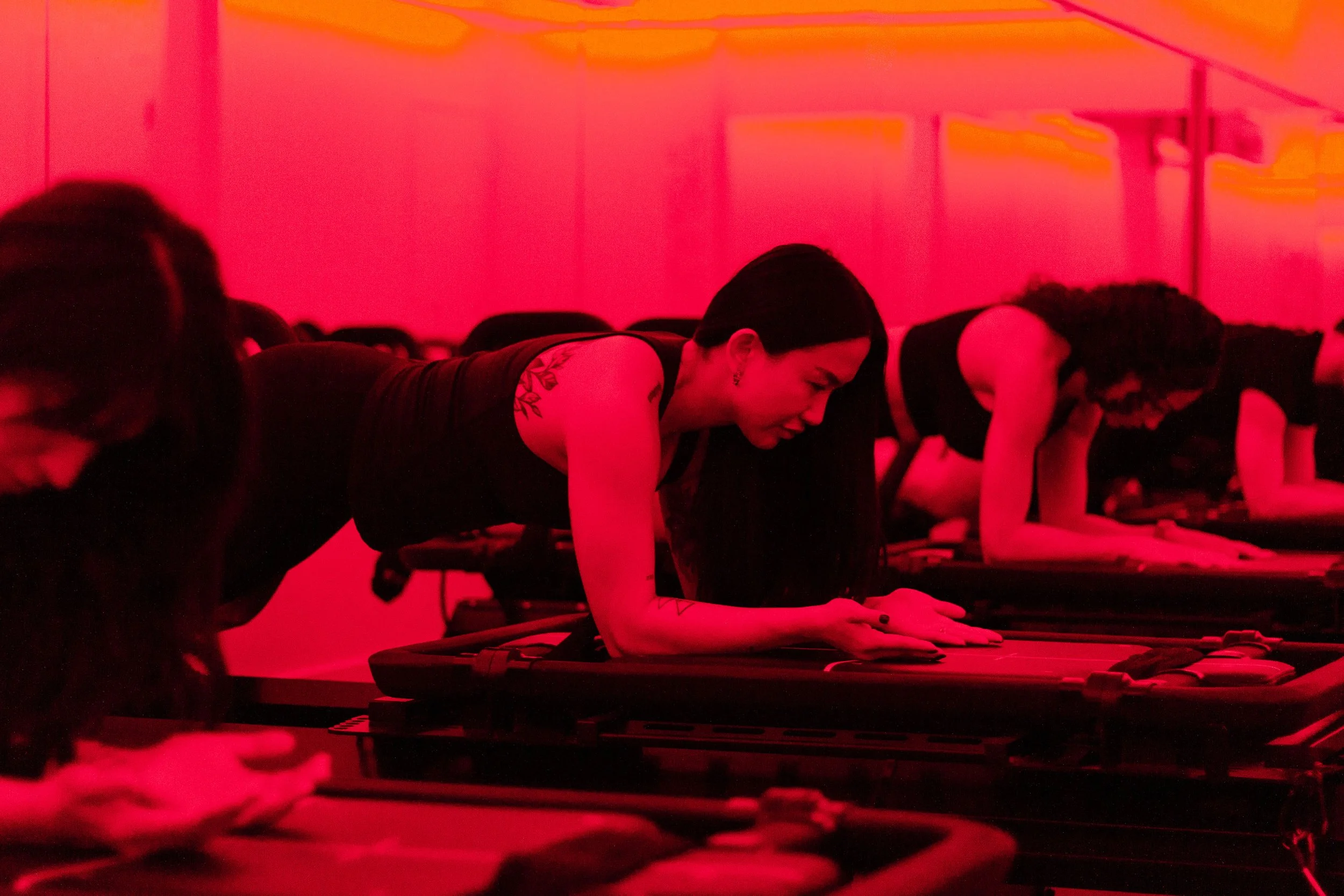
What infrared Lagree actually is
The Megaformer method in plain terms
The Megaformer is a spring-loaded machine with a gliding carriage that travels between two stationary platforms. You adjust resistance by adding or removing springs, ranging from light (around 7 lbs) to heavy (around 45 lbs). What makes the method genuinely hard isn't the weight, it's the tempo. Every movement is performed at a slow, deliberate pace, often an 8-count per phase, keeping your muscles under continuous tension for 45 to 60 seconds per exercise with no rest in between.
This approach targets slow-twitch muscle fibers, the ones responsible for endurance, stability, and lean tone. Because movements are controlled and low-impact, the Megaformer is joint-friendly in a way that most high-intensity training isn't. Your heart rate climbs, your muscles shake, and you're sweating before the first sequence ends. It's both demanding and accessible for most fitness levels.
How infrared heat works during a workout
Infrared heat works differently from the hot air you'd feel in a steam room or a traditional sauna. Instead of heating the air around you, infrared light penetrates directly into muscle tissue, raising your core temperature from the inside out. In a heated Lagree studio, room temperatures typically sit between 110°F and 125°F, though settings vary by studio. That range feels warm and challenging without being suffocating, and it creates a noticeably different physiological response compared to sweating through resistance training at room temperature.
The direct tissue heating triggers vasodilation, increases blood flow, and activates your body's thermoregulatory system simultaneously with the mechanical demands of the workout. Peer-reviewed research, including studies published in journals such as Photomedicine and Laser Surgery and available through PubMed (e.g., PMC4935255, PMC11673748), confirms that far-infrared therapy reliably improves peripheral circulation, enhances nitric oxide production, and supports anti-inflammatory responses, all of which matter when you're asking your muscles to perform under sustained tension.
Where the two methods intersect
Here's where infrared Lagree becomes its own thing. The Megaformer creates mechanical tension through slow, spring-loaded resistance. The infrared environment amplifies your body's physiological response to that tension: circulation increases and muscle elasticity improves, while your body simultaneously manages thermoregulatory demands alongside the mechanical load of the workout. Research supports the circulatory and elasticity effects; whether this directly increases neuromuscular activation during the session is plausible but not yet confirmed by direct controlled studies. What's clear is that the environment creates conditions for more sweat, better-supported tissue, and a recovery-friendly session.
This is not hot Pilates on a reformer. The Megaformer's spring system, the slow-twitch focus, and the specific exercise progressions are what define the experience. The infrared heat is an enhancement to that method, not a replacement for it.
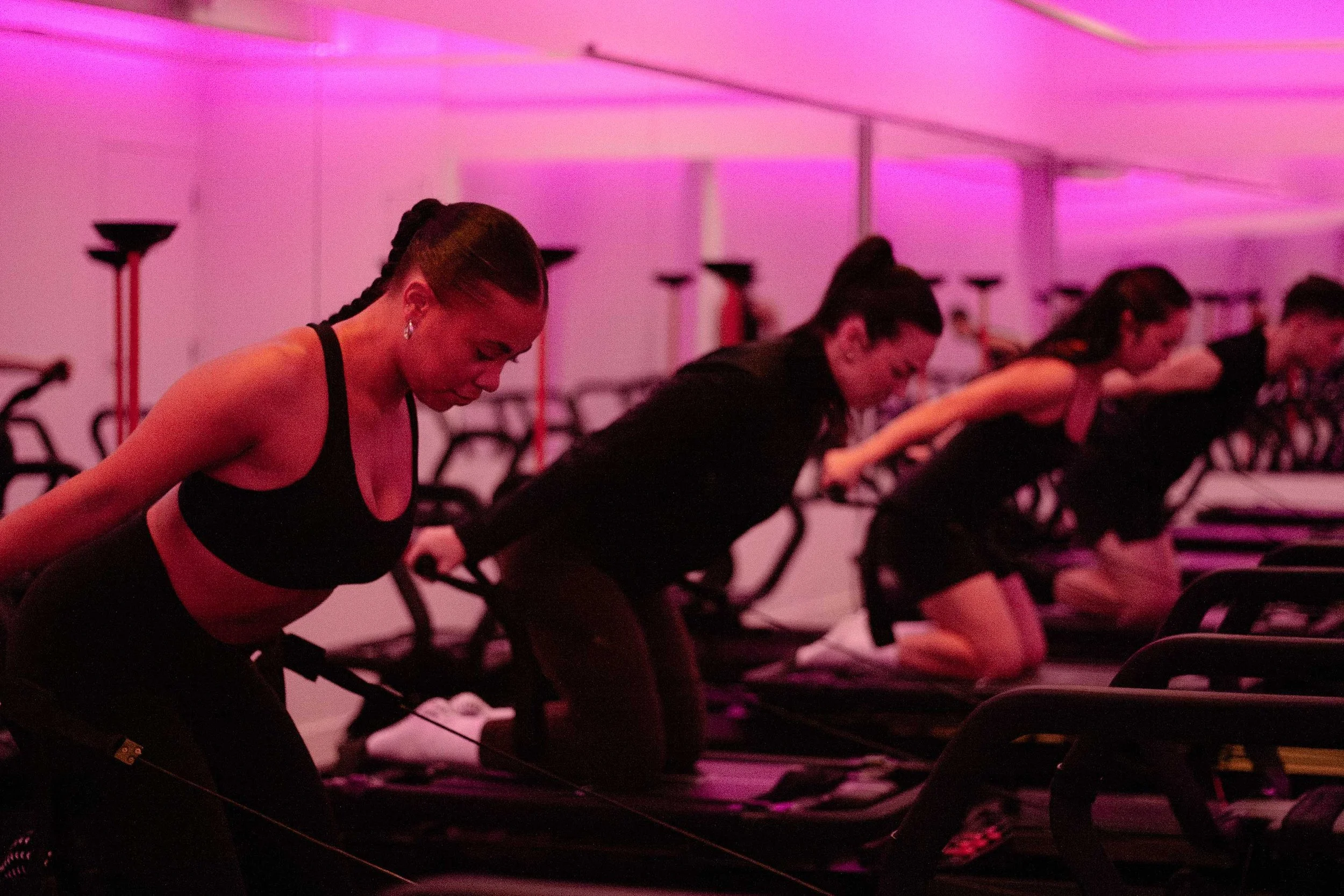
The real benefits of combining infrared heat with the Megaformer
Deeper muscle activation from heat-enhanced blood flow
When infrared heat increases peripheral circulation, working muscles receive oxygen and nutrients more efficiently. Research on far-infrared therapy shows it upregulates nitric oxide production and improves capillary blood flow, both of which support sustained muscle contractions under tension. During slow-tempo Lagree movements where you're holding a position for 45 to 60 seconds, that improved delivery matters. Studies on muscle temperature suggest that warming slow-twitch fibers may increase their twitch force output, which could mean your muscles recruit more effectively and maintain tension longer before fatiguing. Direct evidence of enhanced neuromuscular activation specifically during infrared exercise remains limited, but the mechanical rationale is solid.
Calorie burn and afterburn: what the numbers actually say
A standard 45-minute Lagree class burns approximately 350 to 500 calories, depending on body weight, spring resistance, and effort level. The infrared heat adds a thermoregulatory demand on top of that. Some sources suggest heat can modestly raise energy expenditure, though robust controlled studies comparing calories burned or EPOC in infrared versus room-temperature exercise settings are still limited, so specific percentage estimates should be treated as preliminary. Beyond the class itself, Lagree's time-under-tension format triggers EPOC (excess post-exercise oxygen consumption), keeping your metabolism elevated for 24 to 48 hours after you finish. The EPOC claim is well-supported for high-intensity resistance training broadly. On calorie burn specifically: the thermoregulatory stress of exercising in infrared heat mechanistically increases metabolic demands, but treat definitive numbers with appropriate caution until more direct research catches up.
Faster recovery and reduced soreness
Post-exercise infrared therapy is one of the more consistently supported applications in the research. Published studies on infrared sauna use after training have found reduced muscle soreness scores at 14 hours post-workout and supported neuromuscular recovery through vasodilation and deeper heat penetration into tissue. It's worth noting that the strongest evidence is for passive post-exercise infrared use, exercising inside an infrared-heated environment is a related but distinct context. In an infrared Megaformer workout, the heat plausibly supports circulation and tissue environment during the session in ways that may carry recovery benefits, even if direct head-to-head evidence is still emerging. For people who want to train three to four times per week without excessive soreness accumulating, the combination is worth experiencing firsthand.
How infrared Lagree compares to a standard Lagree class
Temperature and physical environment
A standard Lagree class runs at room temperature, roughly 70°F. An infrared Megaformer session typically runs between 110°F and 125°F. That difference is noticeable from the moment you walk in. Your heart rate will elevate faster, your sweat output increases significantly, infrared environments are widely reported to produce substantially more sweat than room-temperature exercise, and you'll feel the intensity in the first few minutes rather than after a warm-up period. For most people, the heat doesn't make the workout unbearable. It makes it feel more immediate.
Results and training timeline differences
Standard Lagree is highly effective on its own. People who train consistently two to three times per week typically report visible changes in core definition, posture, and lean muscle within four to eight weeks. The infrared format may support a more consistent training schedule by reducing recovery time between sessions. When inflammation is better managed and circulation is enhanced after each class, you may need fewer rest days, and more consistent training at the right intensity compounds results over time. Realistic expectations still apply: no format produces transformation overnight, but the infrared component creates conditions for sustained adaptation.
Which one is right for you
If you're new to Lagree and have any sensitivity to heat, starting with a standard class to learn the machine and movements is a reasonable first step. If you're already active, comfortable in warm environments, and looking for a more intense, results-driven experience, the heated format is accessible to beginners. Regular Lagree practitioners who've plateaued or want to support recovery while training more frequently will find the infrared Megaformer format a logical next step.
Safety: who should be cautious and how to prepare
Conditions that warrant medical clearance first
Heated exercise places additional demand on the cardiovascular system, and that's not appropriate for everyone without medical guidance. Consult your doctor before attending a heated Megaformer class if you have heart arrhythmia, high or low blood pressure, or a history of cardiovascular disease. Pregnancy is a clear contraindication: elevated core temperature from heated exercise increases the risk of complications, and pregnant individuals should avoid heated studios unless explicitly cleared by their provider. Additional conditions that warrant caution include:
Compromised immune function
Recent surgery or open wounds
Neurological conditions that affect heat sensation
Medications that alter thermoregulation
Warning signs during class you shouldn't push through
Any reputable studio will tell you that stepping out of class is always the right call if your body signals something is wrong. Stop and step off the machine if you experience any of the following:
Dizziness or lightheadedness
Nausea
Cramping
Vision disruption
Mental confusion
A racing heart that feels disproportionate to your effort
These are not signs to push through. Move to a cooler area, hydrate, and let the instructor know. There's no shame in it. Heat affects people differently, and knowing your limits is smart, not weak.
How to set yourself up for a safe, strong first session
Preparation makes a meaningful difference in how your first heated class feels. Drink at least 500ml of water in the two hours before class and bring a full water bottle with you. Electrolytes help if you're prone to cramping or heavy sweating. Arrive 10 to 15 minutes early so you can meet the instructor, set up your machine without rushing, and let the environment warm you gradually before class starts. Tell the instructor it's your first time in a heated class. They'll watch for you and offer modifications if needed.
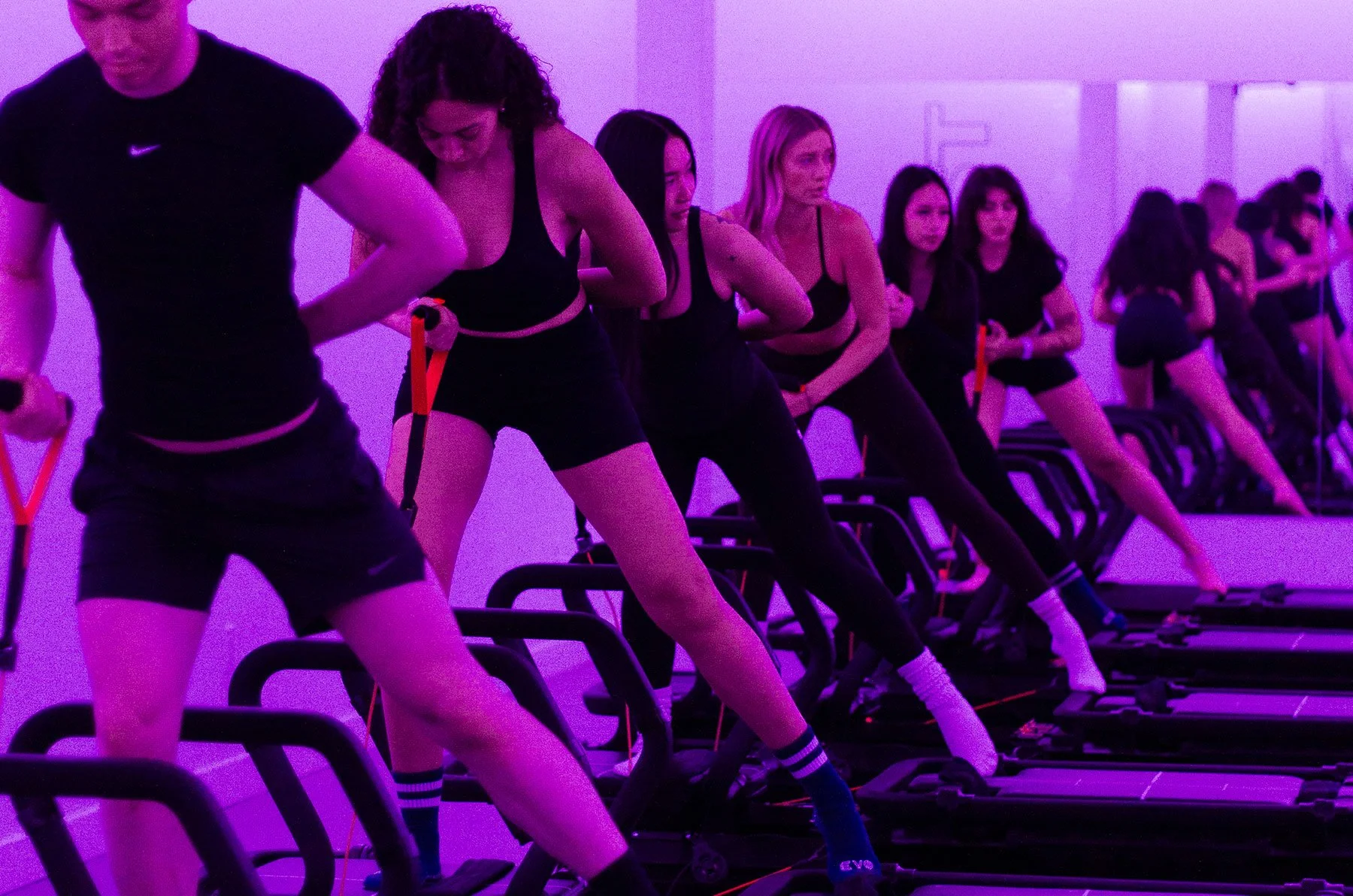
What your first infrared Lagree class actually looks like
Class format and what the 45 minutes feel like
Infrared Lagree classes at Evolution run 45 to 50 minutes with no true rest periods between exercises. Transitions are slow and deliberate, keeping your muscles under tension throughout. Instructors cue each movement in real time, guiding your form, tempo, and spring selection as the class progresses. By the third or fourth exercise, most people feel a deep muscle burn and some involuntary shaking, both normal signs that slow-twitch fibers are fully engaged. The heat makes everything feel more intense, more immediate, and honestly, more satisfying when it's done.
Intensity and what to expect as a beginner
Expect a perceived exertion of about 7 to 9 out of 10. That sounds intimidating, but with modifications available for every movement, beginners can work at a challenging level without overextending. The infrared heat adds perceived intensity in the first 10 minutes especially, so pacing yourself early is smart. If you go all-out immediately, the second half of class becomes much harder. Start with lighter spring resistance, focus on form, and let the tempo do the work. You don't need to be fit to start, you'll get fit by coming back.
What to wear, bring, and leave at home
Grippy socks are required on the Megaformer; bare feet aren't safe on the carriage. Wear form-fitting, moisture-wicking fabrics: leggings, a sports bra or fitted tank. Avoid loose clothing and anything cotton, which absorbs sweat and becomes uncomfortable fast in a heated environment. Bring a full water bottle and a small towel for sweat. Leave the bulky bag at home, most studios offer lockers and floor space is limited.
The only place to try infrared Lagree in the Lower Mainland
What makes Evolution's infrared Lagree format unique
Evolution Fitness & Lagree, at 1143 Kingsway in East Vancouver, is the only Lower Mainland studio offering this infrared Megaformer workout format. The studio pairs professional-grade Megaformers with infrared heating and chromotherapy (color light therapy), which is intended to support mood regulation and stress reduction alongside the physical training. The combination of radiant heat, chromotherapy, and the Megaformer method creates a class experience distinct from a standard Lagree studio, and from simply adding a sauna session after class. If you're searching for infrared Lagree near me in Vancouver or the surrounding area, Evolution is your only local option.
Who the studio is built for
Evolution was designed to be welcoming, not intimidating. Small-group class sizes mean instructors can give real attention to every person in the room, which matters especially for people learning the Megaformer for the first time. The studio attracts beginners curious about Lagree, people recovering from injury who need low-impact but demanding training, and results-focused members who've been doing this for years. The community is one of the most consistent things new members mention, it's the kind of studio people genuinely keep coming back to.
How to book your first trial class
You can book your first infrared Lagree class through the Evolution Fitness & Lagree mobile app or directly at Evolution's website. The studio offers an intro offer for new members, making your first experience low-risk and accessible. If you're not sure whether to start with Infrared Lagree or standard Lagree, the Starting Guide for new members will help you choose. The instructors are used to first-timers, and you won't be the only one walking in without knowing what a Catfish or a Super Lunge is.
Is infrared Lagree worth trying?
Infrared Lagree stands apart because it does two things at once that most workout formats can't: it challenges you at high intensity while actively supporting your body's recovery environment. The Megaformer method is already one of the most effective low-impact training systems available. Add infrared heat and you get improved circulation, better-supported muscle tissue, and a session that's harder to recover from than it is to recover from a standard class. The underlying mechanisms, improved circulation, nitric oxide production, and anti-inflammatory effects from far-infrared exposure, are grounded in peer-reviewed research, even where direct infrared-plus-exercise studies are still catching up.
That said, it's not for everyone right now. If you have cardiovascular conditions, are pregnant, or are sensitive to heat, start with a conversation with your doctor before booking. Safety isn't a barrier to the format, it's the foundation for getting the most out of it.
If you're ready to stop researching and start moving, the next step is straightforward. Book an infrared Lagree class at Evolution Fitness & Lagree in East Vancouver and find out what a heated Megaformer session actually feels like. One class is usually enough to understand why people keep coming back.