
Is a boutique fitness studio worth the cost for you?
So, is a boutique fitness studio worth the cost? It's a fair question, and one worth answering with actual numbers rather than fitness industry hype. Boutique studios typically charge significantly more than a standard gym membership, and that gap is real enough to make anyone pause before signing up. A monthly big-box gym membership in Canada runs around $40, $70, while a boutique studio membership can land anywhere from $150, $250 or more for the same period. The question isn't whether the price difference exists. It's whether what you get on the other side of that difference actually changes anything.
This isn't a motivational pep talk about investing in yourself. It's a transparent breakdown of what boutique studios cost, what you're actually paying for, and how to figure out whether the numbers work for your goals and your life. Members at Evolution Fitness & Lagree in East Vancouver ask this question regularly, especially people who came from big-box gyms and weren't sure whether the experience would feel meaningfully different. This article gives you the honest answer.
What boutique fitness studios actually cost
Monthly memberships and per-class pricing in 2026
The average boutique studio membership in North America runs between $110 and $360 per month for unlimited access, with most studios landing in the $150, $250 range, according to boutique fitness statistics. Per-class drop-in rates typically fall between $21 and $50 depending on the format and market, with research tracking an average per-session cost of around $21 when memberships are broken down by attendance. Compare that to a standard big-box gym in Canada, where a typical membership runs $40, $72 per month, and the boutique gym pricing gap becomes very clear, very quickly.
That said, the raw monthly number doesn't tell the whole story. A $200/month boutique membership across 10 sessions works out to $20 per class. A $50/month gym membership you use twice a week gives you a $6.25 per-session cost. But if that same gym membership gets used four times a month instead of eight, your cost per session doubles. The math changes fast based on how often you actually show up, and that attendance question is really what determines whether a boutique class cost per session is a bargain or a burden.
Is a boutique fitness studio worth the cost? A pricing breakdown
Most boutique studios structure their pricing to lower the entry barrier before asking for a full commitment. Intro trials typically offer 3 classes for $20, $75, which gives you enough sessions to experience the format properly. Class packs are the next step up: a 5-pack usually runs $75, $150, and a 10-pack falls in the $140, $300 range. Single drop-ins tend to cost $20, $40 for most formats, with premium or specialty classes running higher.
One thing that catches new members off guard: late-cancel and no-show policies. Most boutique studios enforce a cancellation window of 8, 12 hours before class, with penalties ranging from a $10, $25 fee to losing the class credit entirely. This isn't arbitrary, class spots are limited, and a reserved seat that goes unused is real revenue lost. Know the policy before you book, and set a phone reminder if you need to. For studio owners and operators looking to set or refine those price points, see guidance on how to price fitness studio memberships.
What that higher price tag actually buys you
Personalized coaching you won't find on a gym floor
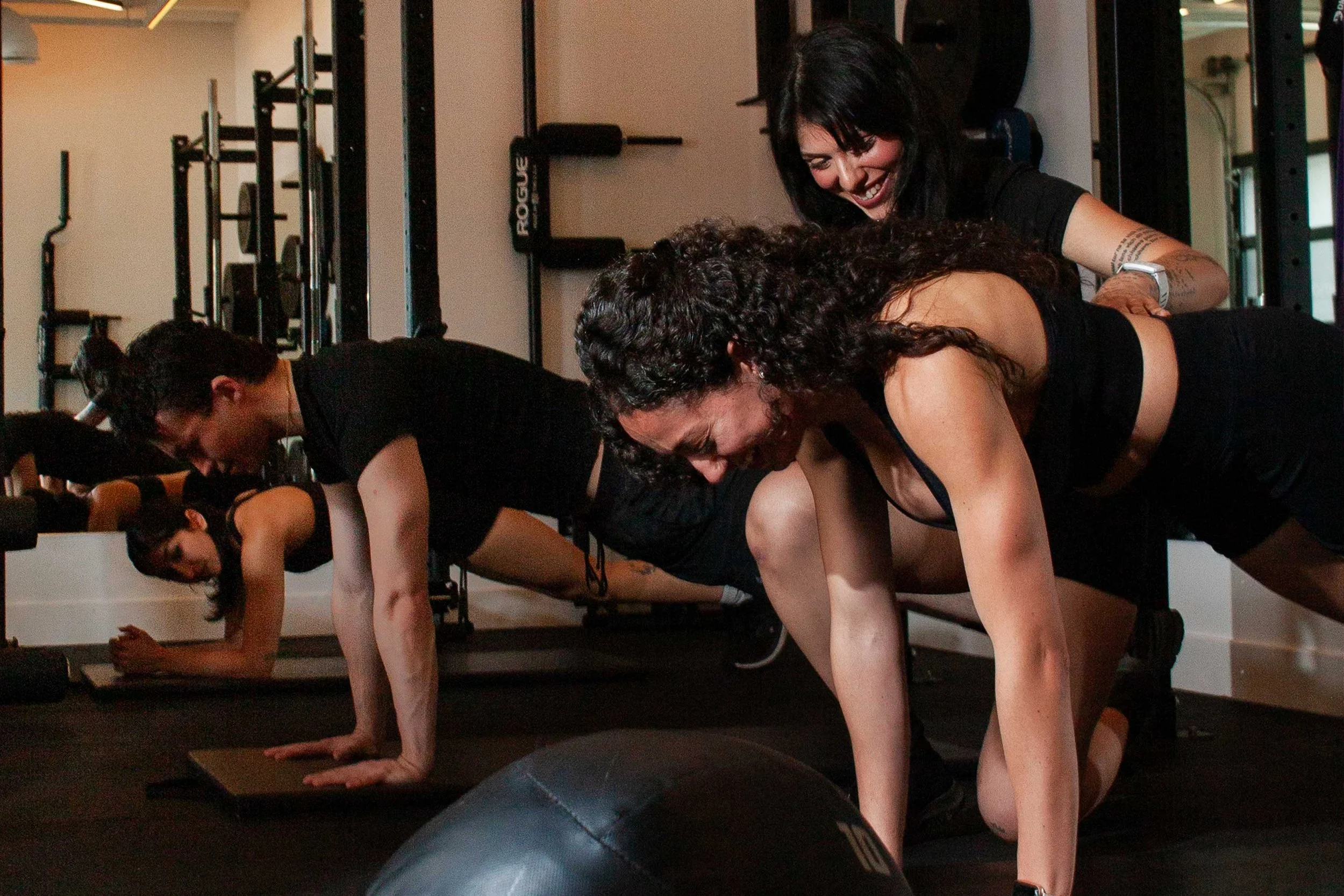
Small-group class sizes at boutique studios are designed to keep numbers low enough for an instructor to watch your form during every set, call out technique cues in real time, and adjust your intensity based on what they're seeing. On a gym floor with 200 members and one floor attendant, that level of attention simply doesn't exist. It's not a criticism of big gyms, it's just not what they're built for.
Structured programming is the other side of this. Many boutique classes are designed with a specific outcome in mind, and sessions often build on each other over time. For someone new to an unfamiliar format like Lagree or boxing, this programming is what bridges the gap between showing up and actually training effectively. You don't have to figure out what to do. You just have to show up and execute.
Specialized equipment and exclusive class formats
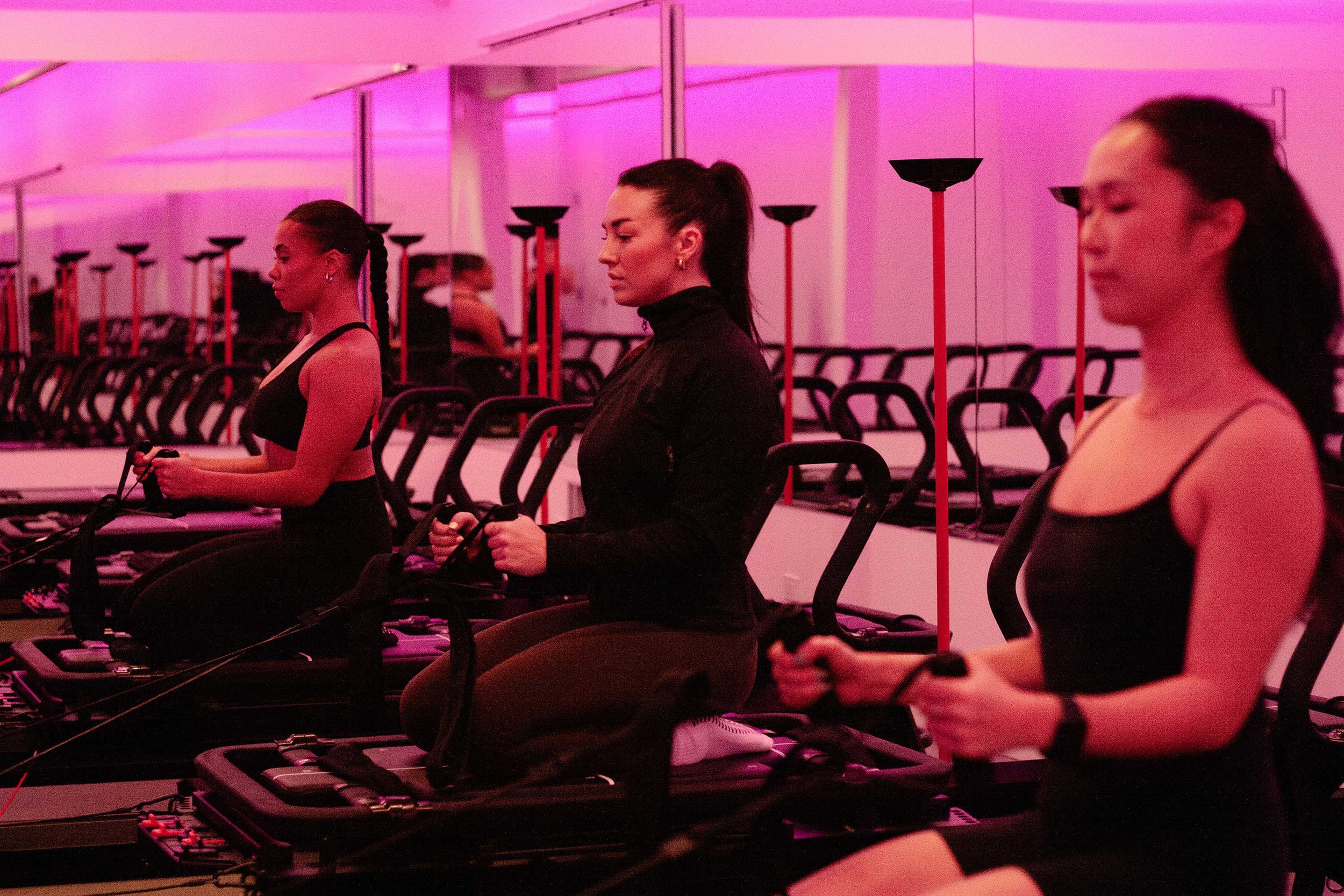
Big-box gyms stock general-purpose equipment: treadmills, free weights, cable machines. Boutique studios invest in format-specific tools that you can't access anywhere else. The Lagree Megaformer is a clear example, it combines resistance, instability, and time under tension in a way that no standard gym floor machine replicates. Evolution Fitness & Lagree in East Vancouver offers Megaformer classes alongside HIIT, boxing, and strength training, including Infrared Lagree classes that aren't available at other Lower Mainland studios. That's a combination impossible to reproduce at a standard gym, no matter what your membership tier is. For a deeper look at how Lagree compares to other reformer-based formats, see Lagree vs Reformer Pilates: Which Is Actually Better?
Having multiple formats under one roof also solves the plateau problem. Members who mix Lagree with boxing or HIIT introduce enough variety to keep progress moving, something that tends to stall when people repeat the same workout routine for months. Cross-training across formats is one of the more practical ways to stay engaged without paying for multiple studio memberships, which changes the boutique fitness value equation significantly.
The community and accountability factor
Why belonging drives attendance more than motivation does
Industry data from fitness research organizations shows boutique studio members attend 2, 3 times per week at consistently high rates, with retention sitting at 75.9% compared to 71.4% at traditional gyms. The gap in numbers looks modest, but the behavioral difference behind it is meaningful. Boutique members aren't just more likely to stay subscribed, they're more likely to actually walk through the door on the days they don't feel like it. See broader boutique studio statistics and trends for additional context on attendance and retention drivers.
The mechanism isn't willpower. It's structure. When you've booked a spot, there's a reserved space with your name on it. Your instructor notices when you're absent. The group of regulars you've trained alongside for three months expects to see you. That social accountability is something big-box gyms structurally can't replicate, because their model depends on unlimited, anonymous access by design.
How community translates into real results
The members who see body composition changes, strength gains, and improved endurance are the ones who train consistently. Format matters less than frequency. Boutique studios engineer that consistency through scheduled classes, booked spots, and the social investment of being part of a group. Open-access gyms leave that consistency entirely up to you.
Community isn't just a feel-good bonus. It's the actual mechanism that makes the investment pay off physically. Members who feel a sense of belonging at their studio show up more often, and showing up more often is what produces results.
The honest case for big-box gyms
Where traditional gyms genuinely win
Cost is the obvious advantage. At $40, $70 per month, a big-box gym membership is financially accessible to almost anyone and covers a broad variety of equipment. Flexibility is the other real win: 24-hour access with no booking windows, no late-cancel penalties, and the freedom to train however you want on any given day. For self-directed, experienced lifters who know exactly what they're doing and stay consistent without external accountability, a big gym can deliver strong results at a fraction of the boutique price.
If your schedule is genuinely unpredictable, the friction of booking classes around a shifting work calendar can make boutique studios impractical, regardless of how much you like the format. The better gym is the one you can actually fit into your life consistently.
When big-box value breaks down
Industry data suggests many big-box gym members underuse their memberships, with average attendance hovering around 1.5 visits per week, though usage patterns do vary. Without programming, coaching, or community structure, motivation relies entirely on personal discipline. Most people aren't wired to sustain that long-term, not because they lack commitment, but because accountability structures work and most gyms don't provide them.
A $50/month membership looks like value until you calculate the cost per session for someone who shows up four times a month. At that attendance rate, you're paying $12.50 per session for a space you're barely using.
That's not a bargain. It's a sunk cost with good intentions attached to it.
Is a boutique fitness studio worth the cost for your goals?
The profile of someone who thrives in a boutique environment
Boutique studio members tend to skew toward women in their late 20s to mid-40s, Millennials in middle-to-upper income brackets, and experience-oriented consumers who value the environment as much as the workout itself. Industry research from organizations like Mindbody and IHRSA consistently finds that women make up the majority of boutique studio participants, often around 77%, with the strongest loyalty coming from the 25, 45 age range. Beyond demographics, the better predictor is behavioral: people who respond to accountability, who have specific goals like toning, core strength, or low-impact training, and who want to invest in results rather than just access.
People dealing with joint pain, past injuries, or burnout from high-impact training also disproportionately benefit from boutique formats built around low-impact, high-intensity output. Lagree, for example, was specifically designed to be demanding without the joint stress of running, jumping, or heavy lifting. That combination is genuinely hard to find at a standard gym.
Signs a big-box gym might serve you better
If you're highly self-motivated, experienced with programming your own training, prefer to work out alone, or your schedule simply doesn't allow for fixed class times, a big gym is the more practical choice. Boutique studios require a commitment to showing up at specific times, and the value erodes quickly if booking friction keeps you from attending consistently.
The honest answer is straightforward: the best gym is the one you actually use. If you'd use a boutique studio three times a week, the per-session math works in your favor. If you'd use it once a week with good intentions of going more, it doesn't.

How to try boutique fitness without overcommitting
Using intro offers and class packs strategically
Most boutique studios offer a low-cost intro trial specifically designed to let you experience the format before committing to a monthly membership. Use that window to test three specific things: whether the class format challenges you in a way you find compelling, whether the coaching makes a difference you can actually feel during the session, and whether you leave wanting to come back. Those three signals tell you more than any pricing comparison will.
Class packs are a smart middle step if the trial convinces you but a monthly commitment feels too soon. A 5- or 10-pack gives you a lower per-class cost than drop-ins without locking you into a recurring charge. Use the pack to build a consistent attendance habit, and once you know your realistic weekly frequency, a monthly membership usually becomes the better financial decision. If you're weighing the trade-offs between packs and recurring subscriptions, this piece on class packs vs memberships is a helpful primer.
What to look for in your first studio, and where to start in East Vancouver
Not all boutique studios deliver the same value, and boutique membership pros and cons vary depending on what's actually on offer. Look for genuine instructor attention in small group settings, a clear format with structured programming, and ideally multiple class types so you can stay engaged without hopping between memberships. Studios built around only one format leave you with nowhere to go if that format stops working for you.
Evolution Fitness & Lagree in East Vancouver is built with that variety in mind. Lagree Megaformer, HIIT, boxing, strength training, and Infrared Lagree classes are all available under one roof, which means members can mix formats, avoid plateaus, and stay engaged long-term without splitting memberships across multiple studios. The studio also offers a beginner-friendly Starting Guide and an easy mobile booking app, so your first class isn't overwhelming even if you've never set foot on a Megaformer before.
So, is a boutique fitness studio worth the cost?
It depends entirely on how you use it. For members who book consistently, value coaching, and thrive in a community environment, the cost-per-session math often beats a big-box membership they're barely using. The boutique premium pays for structure, accountability, and specialized access. Those things have real value, but only if you show up often enough to let them work.
Before you decide, run three numbers: your realistic weekly attendance at a boutique studio, your current cost per session at whatever you're doing now, and what specialized access, like Lagree or Infrared Lagree, is genuinely worth to you. The decision usually becomes obvious once you do that math honestly.
The only real way to know whether a boutique fitness studio is worth the cost for you is to test it under an intro offer, where the financial risk is low and the experience is real. If Evolution Fitness & Lagree is near you in East Vancouver, their intro offer is exactly that kind of low-commitment starting point; see their Pricing or book a class, feel the difference, and let your attendance rate tell you the answer.